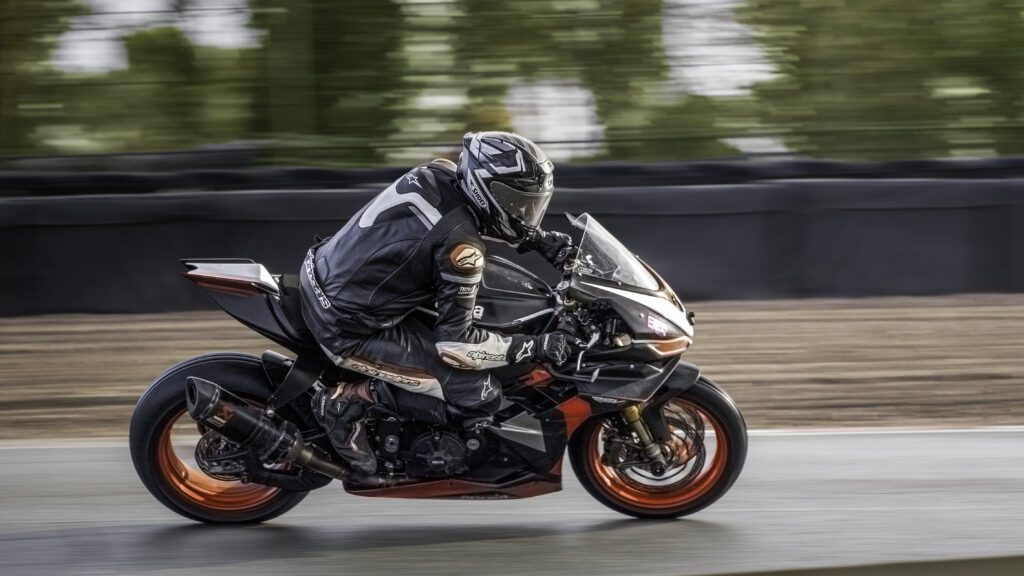
OM System OM-3 OM 40-150 f2.8 Pro 1/125 sec; f6.3, ISO 640
The sound arrives before the rider does — a tightening mechanical rhythm rising through the corner before colour and shape resolve into something defined. Motorsport photography is often described through extremes. Extreme speed. Extreme risk. Extreme shutter settings that look impressive written beneath an image. Numbers like 1/50s are sometimes treated as proof of commitment. But motion is not about chasing the lowest number. It is about control.
This frame was created at 1/125s with the OM-3, not to demonstrate how slow I could shoot, but to shape movement with intention. The rider was exiting the apex and beginning to accelerate, the racing line consistent, the background clean and horizontal. The conditions allowed for blur, but they also demanded precision. Dropping to 1/50s at this distance would have dramatically reduced consistency, narrowing the margin for error until every pass became a gamble. I wasn’t looking for a single dramatic frame. I was looking for repeatability.
The image was built in Manual mode at 1/125s, f/6.3, ISO 640, using spot metering to prioritise the rider over the surrounding track and high-contrast elements. In motorsport environments, reflective surfaces and dark asphalt can mislead broader metering patterns, especially across repeated passes. Manual exposure ensured that once the light was set correctly, it stayed controlled. No exposure drift. No unexpected shifts between frames. Just timing and execution.
Continuous AF with motorsport subject detection allowed me to commit fully to the motion. During acceleration, subtle changes in posture and angle can challenge focus systems, and hesitation costs frames. The OM-3 maintained lock reliably, which changes the way you work. When you trust the camera to stay with the subject, your attention shifts entirely to rhythm, positioning and anticipation. The camera becomes transparent, and that transparency is where confidence grows.
At 1/125s, the rider remains clearly defined while the wheels communicate rotation and the background stretches just enough to express speed. It delivers motion without sacrificing structure. There are situations where 1/50s is the right decision, but not every corner demands maximum blur. Sometimes the stronger image comes from balance — enough movement to feel dynamic, enough clarity to feel deliberate.
What stands out most in practice is how naturally the OM-3 integrates into this process. The stabilisation supports fluid panning without fighting micro-adjustments. The compact form reduces fatigue during repeated high-speed sequences. The handling encourages steadiness rather than tension. In motorsport photography, small ergonomic advantages compound over time. Reliability builds confidence, confidence improves timing, and timing creates consistency.
This image is not about a number. It is about a decision. 1/125s was chosen because it matched the speed, the distance and the intention behind the frame. Motion was controlled, not chased. And in that control, the image finds its strength.
Camera: OM System OM-3. Manual mode. 1/125s at f/6.3, ISO 640. Spot metering. Continuous AF with motorsport subject detection. High-speed sequential drive.